Case study · Interview cinematography
Previs to Production
Three days before a two-camera interview in Dallas, I built the scene in set.a.light 3D: the table, the kitchen wall behind the talent, the red fridge on frame right, and both camera positions. On shoot day, the frames came back almost exactly as planned.
The plan
The previs locks the decisions that usually eat the first hour on set: where the table edge sits in frame, how much of the counter reads behind the talent, where the red fridge breaks the right edge, and how the tight camera offsets from the wide. Both angles were rendered before anyone loaded a truck.
A camera · Wide
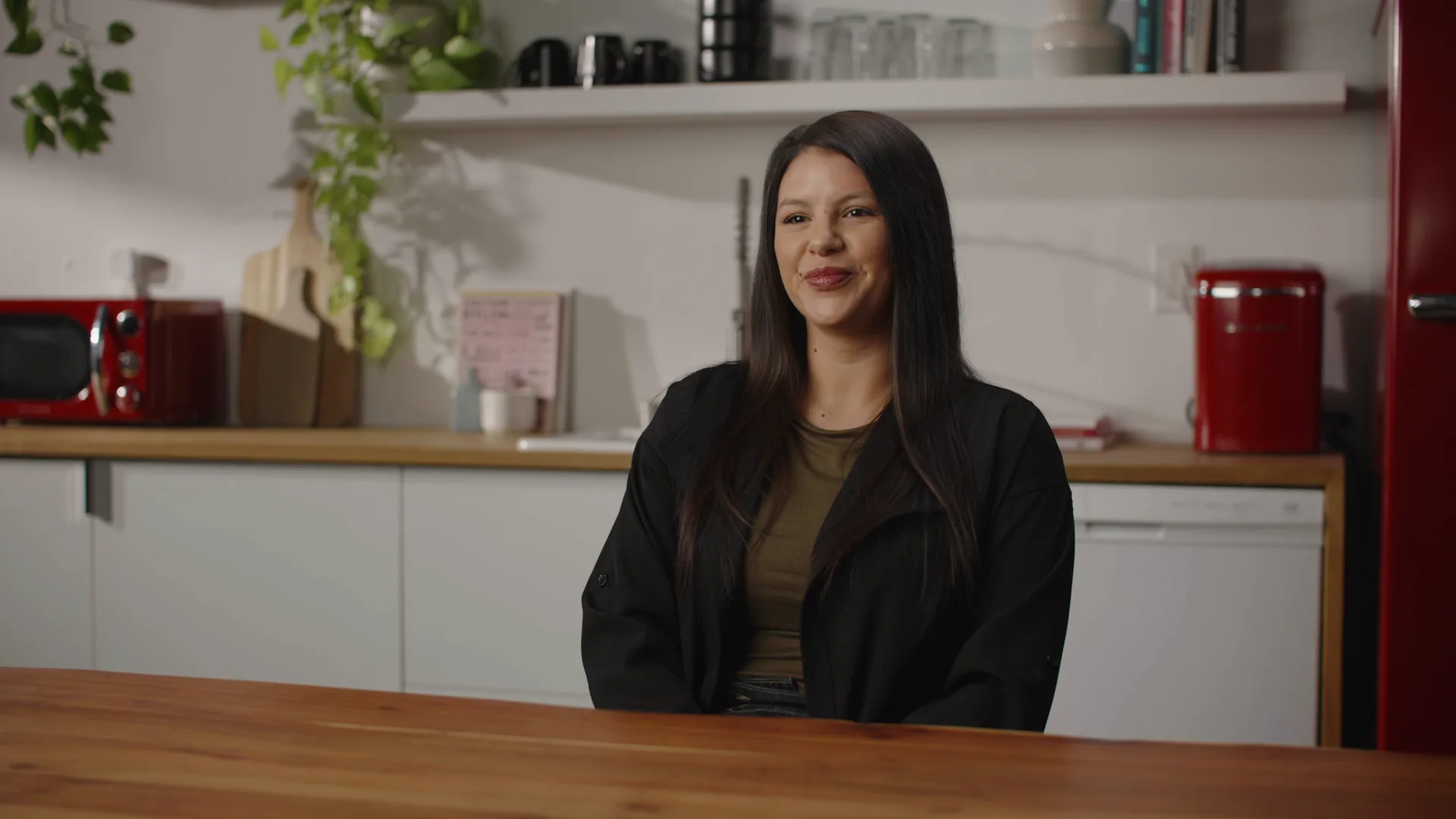
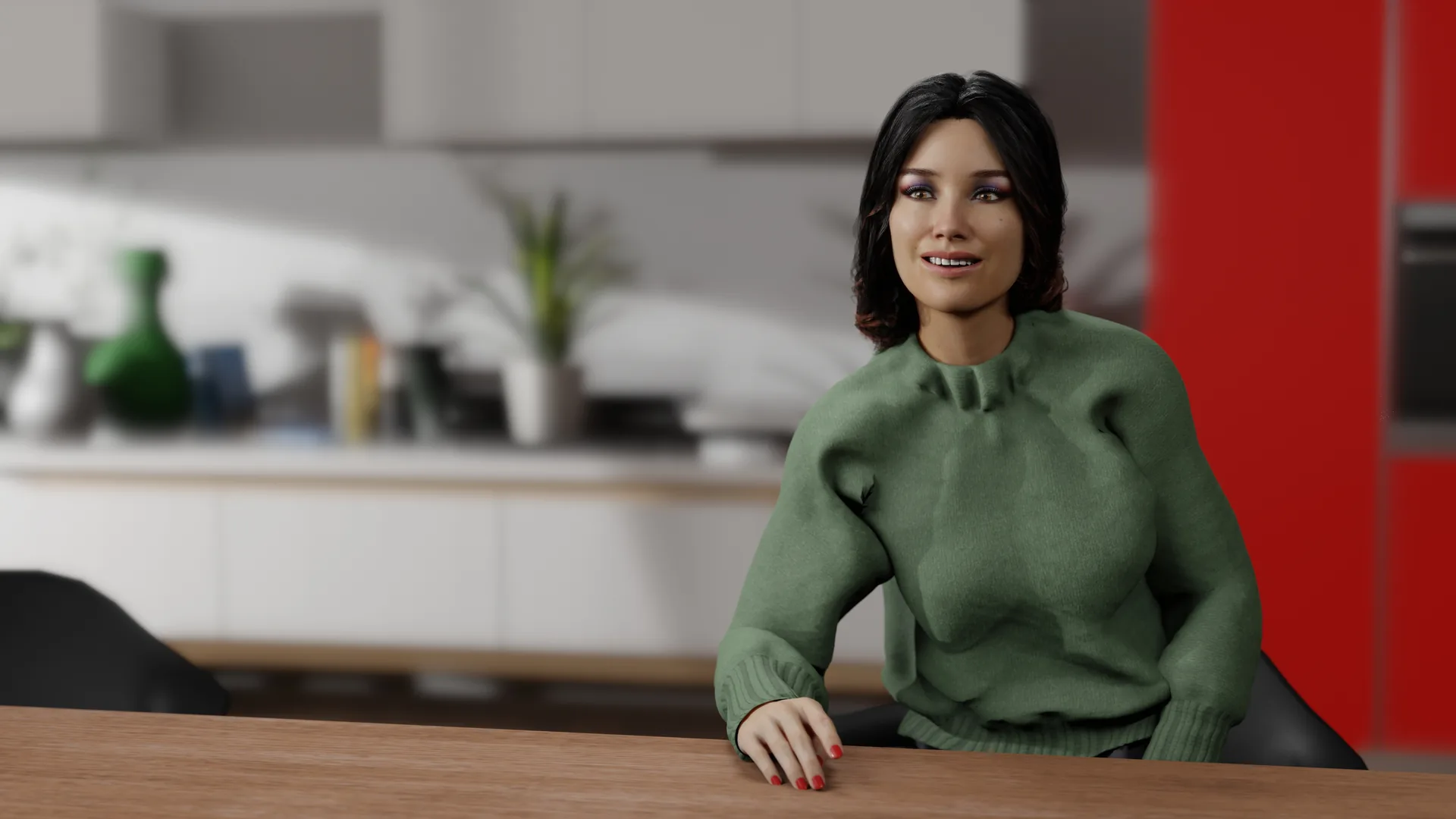
Drag to compare. Table line, counter height, the plant and shelf, and the fridge on frame right all carry over from the render to the A camera.
B camera · Tight
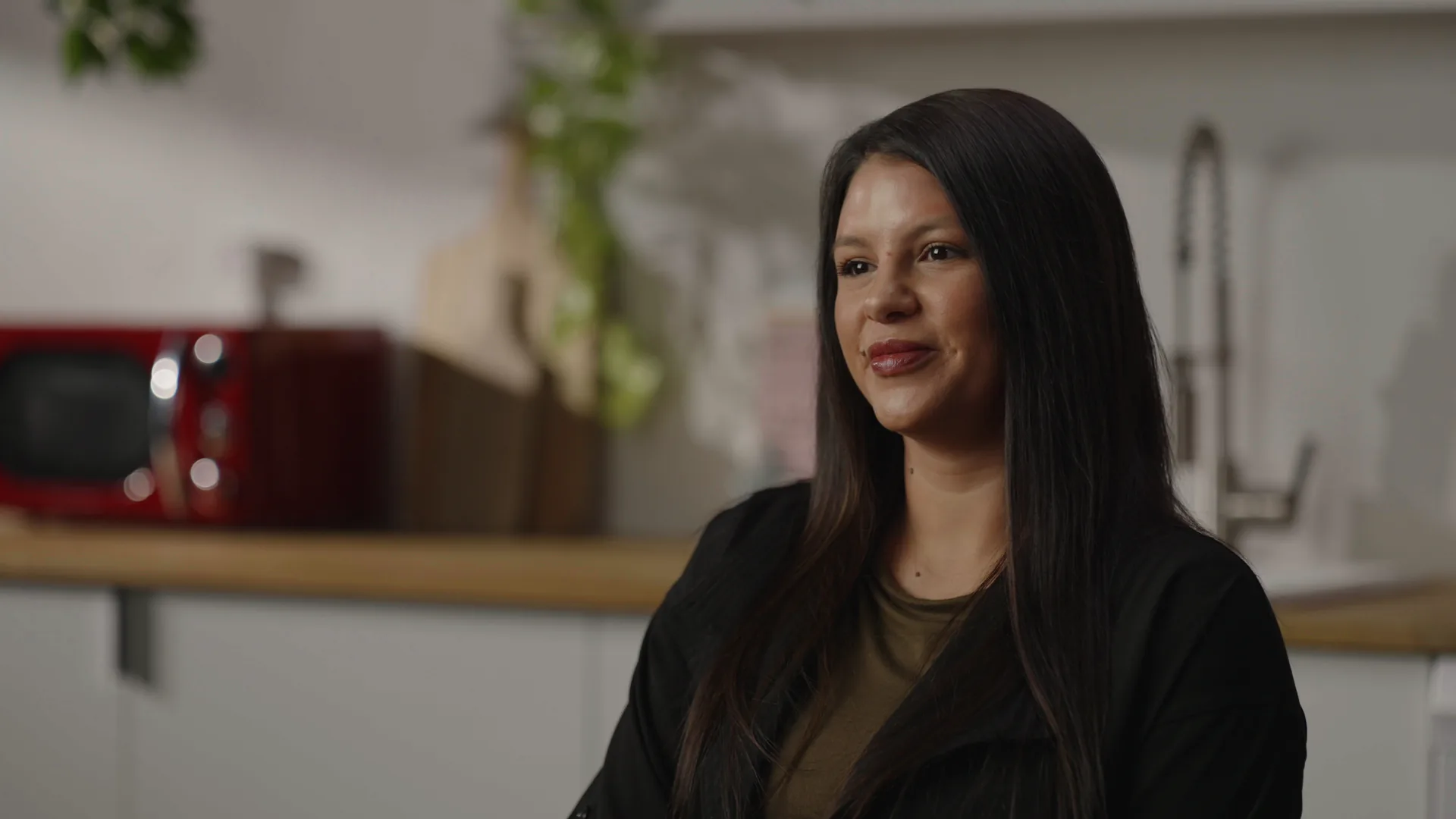
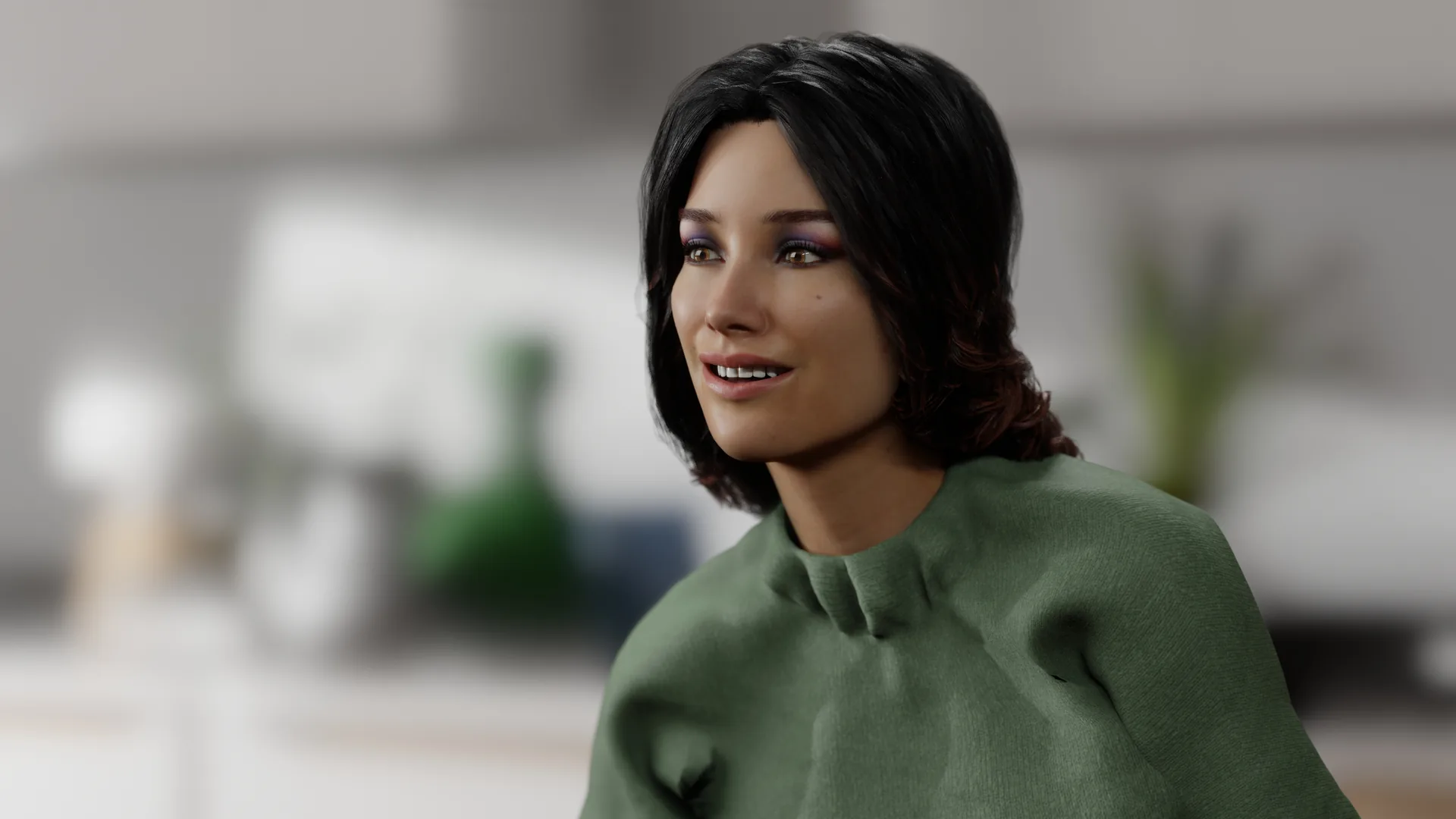
The tight angle holds the same three-quarter eyeline, with the counter and red appliances falling soft behind her.
What changed on the day
The talent, wardrobe and counter props are real, not 3D stand-ins, so the styling differs. Production frames here use Sony's standard S-Log3 to Rec.709 conversion LUT, not a final grade.
Why it matters
Previs turns a lighting and blocking conversation into a picture everyone can agree on before call time. On an interview day, that time goes back to the conversation itself.